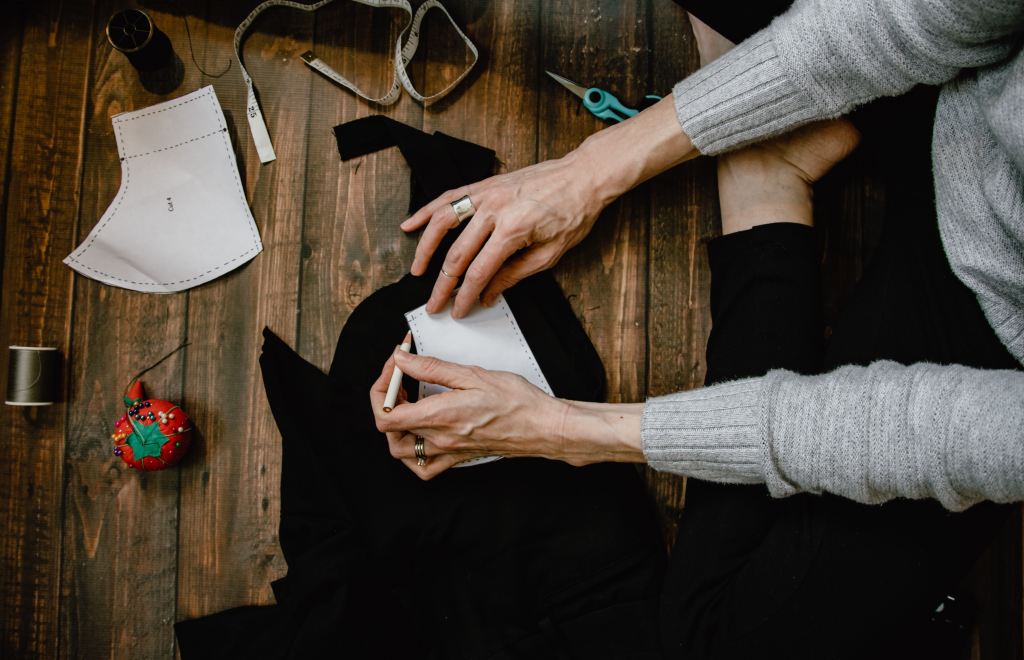
If you’ve recently started sewing, you may be familiar with the use of patterns. Patterns are guides or templates that provide instructions for creating garments, accessories or homeware items such as curtains. These essential tools enable sewing enthusiasts to create consistent, high-quality items regardless of skill level and experience. Some sewing patterns also provide guidance, such as the type of fabric best suited for the project and estimated time frames for completion. To help you on your sewing journey, here are some essential tips for using patterns.
Choose A Pattern That Suits Your Skill Level
Although crafters of varying skill levels can use sewing patterns, choosing one well suited to your level of competency will yield the best results. For instance, if you’re relatively new to sewing, seek out patterns marked as “beginner” or “easy”, as they are typically designed to provide beginners with a straightforward introduction to using patterns as a tool. Once you’ve completed a few beginner projects, you can gradually work your way up to working with more complex patterns.
Read The Instructions
As a rule of thumb, studying your pattern instructions thoroughly before diving in is always a good idea. This will grant you a comprehensive overview of the entire sewing process from beginning to finish. Not only that, but pattern instructions often list the necessary materials and tools needed to complete the project so that you can be fully prepared for each step. Additionally, reading the instructions will help you plan your sewing process more effectively, giving you an estimated timeframe.
Iron Your Fabric
Ironing or pressing your fabric before sewing is a crucial step that creates an even surface for accurate pattern placement and cutting. Wrinkles and folds in the material can distort measurements, resulting in misaligned pattern pieces and uneven seams, causing you to waste valuable fabric and time. Moreover, some fabrics have a tendency to stretch or distort when handled or cut. Ironing helps relax the fibres, making the fabric easier to cut while ensuring that it retains its original shape. Pressing your seams as you go is also important for easier, more precise stitching.
Use Tailor’s Chalk
Tailor’s chalk is another valuable tool to keep in your sewing box. Tailor’s chalk allows you to make temporary markings like seam lines, darts, notches, and other important reference points that can be easily removed or brushed away once they’re no longer needed. Using this chalk in conjunction with a pattern helps to improve accuracy, enhancing the final fit and overall professional appearance of your project. You can purchase tailor’s chalk at your local haberdashery or online in numerous colours and different forms, such as clay-based or wax-based.
Measure And Remeasure
Inaccurate measurements can quickly spoil a sewing project. Patterns such as the Simplicity Pattern are often designed with standardised sizing, but they might not perfectly align with your body’s proportions. Additionally, it’s worth noting that pattern measurements could be provided in either inches or centimetres, depending on where they were produced. While many modern patterns include both units for clarity, potential confusion between the two systems can lead to irreparable mistakes. Remember the mantra “measure twice, cut once” as a reminder to double-check measurements and ensure accuracy before going in with the fabric scissors.
Invest In Fabric Scissors
Speaking of fabric scissors, investing in a high-quality pair can significantly improve your sewing experience. Fabric scissors are specifically designed with exceptionally sharp, precise blades that glide through fabric smoothly without causing fraying or uneven edges. On the other hand, using regular scissors for fabric can lead to jagged cuts, impacting your projects’ overall appearance and quality. Additionally, fabric scissors are often ergonomically designed, making them comfortable to hold and use for extended periods, reducing strain on your hand and wrist.
Use Online Tutorials
Regardless of your sewing skill level, using a complex pattern can be tricky. While many patterns come with instructions, they can be difficult to decipher if you’re a beginner. Fortunately, there is a wealth of online tutorials to help you get to grips with using patterns. The next time you experience trouble with a sewing pattern, consider heading over to YouTube, where many experienced professionals share beginner-friendly, step-by-step videos on using patterns.
 Screenlock